

What Is an NDIS Support Coordinator? Roles, Responsibilities & How They Help
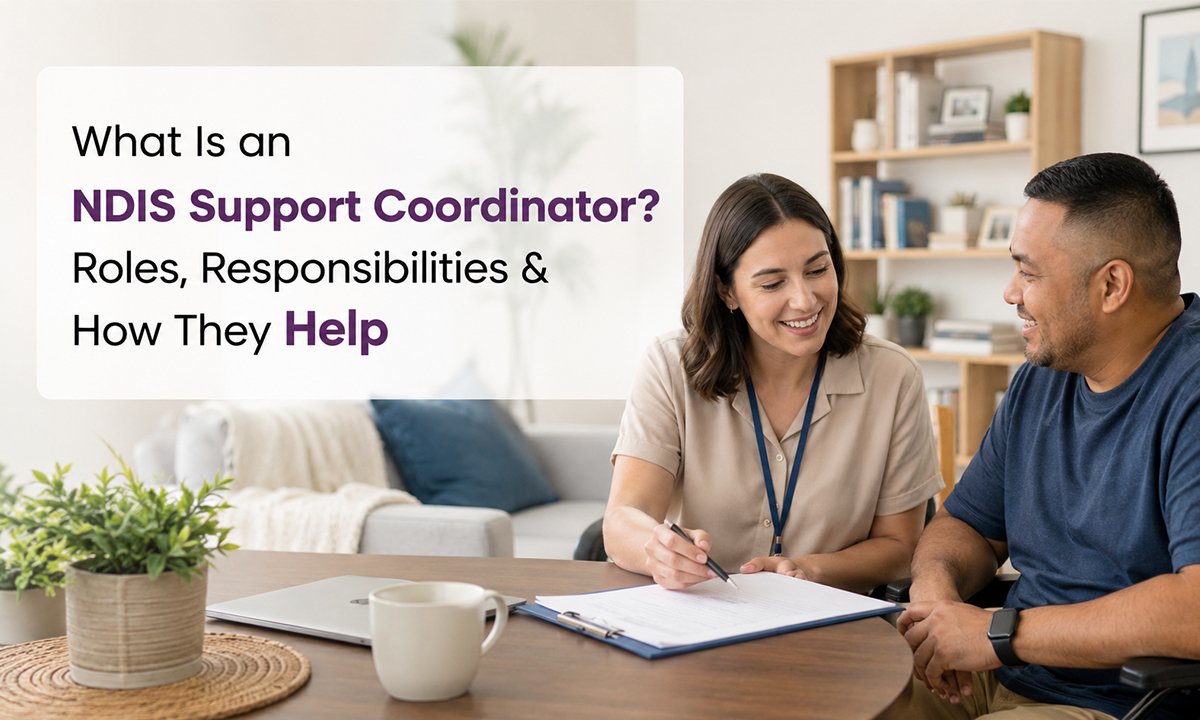
Starting your NDIS journey can feel exciting, but it can also be confusing. After receiving an NDIS plan, many participants are unsure how to use their funding, choose the right providers, or organise the support they need. This is where support coordination can make a real difference.
If you’ve been asking yourself what is a support coordinator, this guide explains their role, responsibilities, how they help participants, and why choosing the right provider matters.
At This Ability Care, we are committed to helping NDIS participants understand their plans and access quality disability services that support their goals and independence.
What Is a Support Coordinator?
A support coordinator is a professional who helps NDIS participants understand their plans, connect with suitable service providers, and build the skills needed to manage their supports independently.
In simple terms, they work alongside participants to make the most of their NDIS funding while ensuring the supports they receive match their goals, lifestyle, and personal needs.
Importantly, a coordinator doesn’t replace your decision-making. Instead, they provide guidance and practical assistance so you remain in control of your own journey.

Is the NDIS Support Coordinator Role Changing?
As part of proposed changes to the NDIS, the role of a Support Coordinator may be referred to as a Navigator in the future. The aim of this change is to provide participants with clearer guidance and more specialised support based on their individual needs.
Under this proposed model, there may be different types of navigators, including Specialist Navigators and Psychosocial Recovery Navigators, who can assist participants with more specific or complex support requirements.
While the terminology may change, the purpose remains similar — helping participants understand their plans, connect with the right services, and build confidence to manage their supports independently.
Why Is a Support Coordinator Important?
The NDIS offers many different supports, providers, and funding categories. For someone new to the scheme, understanding everything can feel overwhelming — which is exactly why knowing what does a support coordinator do matters so much early on.
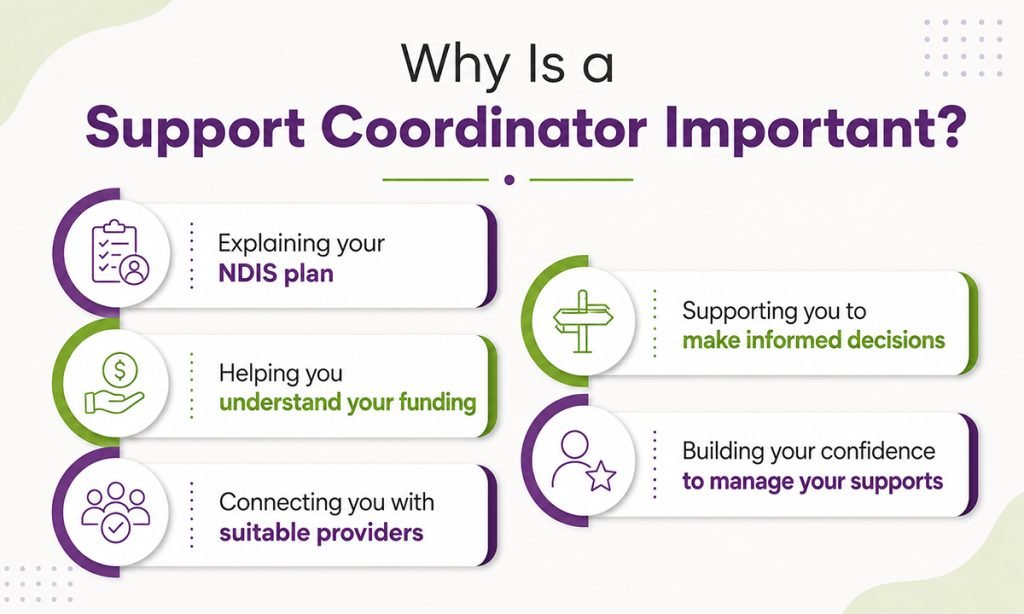
A support coordinator simplifies the process by:
- Explaining your NDIS plan in plain language
- Helping you understand your funding categories
- Connecting you with suitable providers
- Supporting informed decision-making
- Building your confidence to manage supports over time
This kind of guidance helps participants feel supported without creating dependence — the goal is always to build your own skills and confidence.
What Does a Support Coordinator Do?
Once you have your NDIS plan, a coordinator’s day-to-day responsibilities often include:
- Explaining your approved NDIS funding
- Identifying the services you require
- Connecting you with trusted, registered providers
- Coordinating appointments and supports
- Monitoring your progress towards your goals
- Helping resolve service delivery issues
- Preparing you for NDIS plan reviews
- Supporting you through changes in circumstances
The Role of a Support Coordinator in the NDIS
The NDIS support coordinator roles and responsibilities go beyond simply recommending providers — they work closely with participants to ensure all services work together effectively. Here’s a closer look at their core responsibilities:
Helping You Understand Your Plan
Your NDIS plan contains funding categories and goals that can be difficult to interpret. A coordinator breaks down how your funding can be used and what supports are available to you.
Connecting You With Providers
Finding reliable disability providers takes time and local knowledge. Coordinators help you compare options and choose services that genuinely fit your needs.
Building Independence
One of the most valuable parts of this role is teaching participants how to organise and manage their own supports over time — building confidence for the long run.
Coordinating Multiple Services
Many participants work with several providers at once. A coordinator makes sure everyone is aligned, so support delivery stays consistent and effective.
Together, these responsibilities help participants achieve better outcomes while staying firmly in control of their own decisions.

Benefits of Having a Support Coordinator
- Better understanding of your NDIS plan
- Easier access to quality providers
- Improved coordination between services
- Reduced stress when managing supports
- Greater confidence in decision-making
- Assistance during plan reviews
- Ongoing guidance when circumstances change
Who Can Receive Support Coordination?
Support coordination isn’t automatically included in every NDIS plan. The NDIA considers whether a participant would benefit from extra assistance to understand and implement their plan. Factors like complex support needs, multiple service providers, or significant life changes can influence whether this funding is included.
If it is funded, participants can choose the support coordinator they believe best suits their needs. You can check your plan’s funded supports directly on the NDIS website or through the myplace portal.
Choosing the Right Support Coordinator
Understanding the role of a support coordinator helps you know what to look for. Since this person will guide many aspects of your NDIS journey, it’s worth choosing carefully. Look for someone who:
- Understands the NDIS well
- Listens carefully to your goals
- Respects your choices
- Communicates clearly
- Has experience working with disability supports
- Encourages independence rather than dependence
- Has strong local provider knowledge
A good coordinator empowers participants rather than making decisions on their behalf.

Support Coordinator vs. Plan Manager: What's the Difference?
These two roles are often confused, but they serve different purposes:
- A support coordinator helps you organise and coordinate your day-to-day supports and services.
- A plan manager handles the financial side of your plan — paying provider invoices and tracking your budget.
Some participants use both services together for a more complete support experience.
How This Ability Care Can Help
At This Ability Care, we understand that every participant has different goals, challenges, and support needs.
Our experienced team works alongside participants and families to make navigating the NDIS easier. Whether you’re new to the scheme or reviewing an existing plan, we help you understand your funding, connect with trusted providers, and coordinate supports that align with your goals.
Learn more about our support coordination services or get in touch with our team for personalised guidance.
Final Thoughts
By now it should be clear what is an NDIS support coordinator and how they fit into your journey. A skilled support coordinator can simplify the NDIS process, connect you with quality providers, and help you build the skills needed to manage your plan with confidence.
At This Ability Care, we’re committed to helping participants achieve their goals through personalised guidance, professional disability services, and person-centred support that promotes independence and long-term wellbeing.
NDIS Support After Leaving Prison: What You Need to Know

What Is Forensic Disability Support and Who Needs It?

What Is NDIS Plan Management? How Does It Work?

Frequently Asked Questions
What is an NDIS support coordinator?
A NDIS support coordinator is a common question among new participants. An NDIS support coordinator is a professional who helps participants understand their NDIS plan, connect with suitable providers, and coordinate services to achieve their goals.
What a support coordinator do?
They explain your NDIS plan, connect you with service providers, organise supports, help resolve service issues, and prepare you for future plan reviews.
What is the role of a support coordinator in the NDIS?
The role is to help participants understand their funding, coordinate services, build independence, and ensure supports work together to achieve personal goals.
What is the difference between a support coordinator and a plan manager?
A support coordinator helps organise and coordinate your supports, while a plan manager manages the financial side of your NDIS funding, including paying provider invoices and tracking your budget.
Who is eligible for NDIS support coordination?
Participants whose NDIS plans include funding for support coordination, usually due to more complex support needs, are eligible to receive this service.
Is support coordination funded by the NDIS?
Yes. Support coordination may be funded by the NDIS if the NDIA determines that it is reasonable and necessary based on your individual circumstances.
How do I choose the right support coordinator?
Choose someone with strong NDIS knowledge, good communication skills, experience with disability services, and a commitment to supporting your individual goals and independence.
Can I change my NDIS support coordinator?
Yes. Participants have the right to change their support coordinator if they believe another provider is better suited to their needs.
What is coordination of supports in the NDIS?
Coordination of supports is an NDIS service that helps participants implement their plans, connect with providers, manage services, and build the skills needed to manage supports independently.
Do all NDIS participants receive support coordination?
No. Support coordination is not automatically included in every NDIS plan. Funding is provided only when the NDIA determines it is appropriate based on the participant’s support needs.