

NDIS Support After Leaving Prison: What You Need to Know
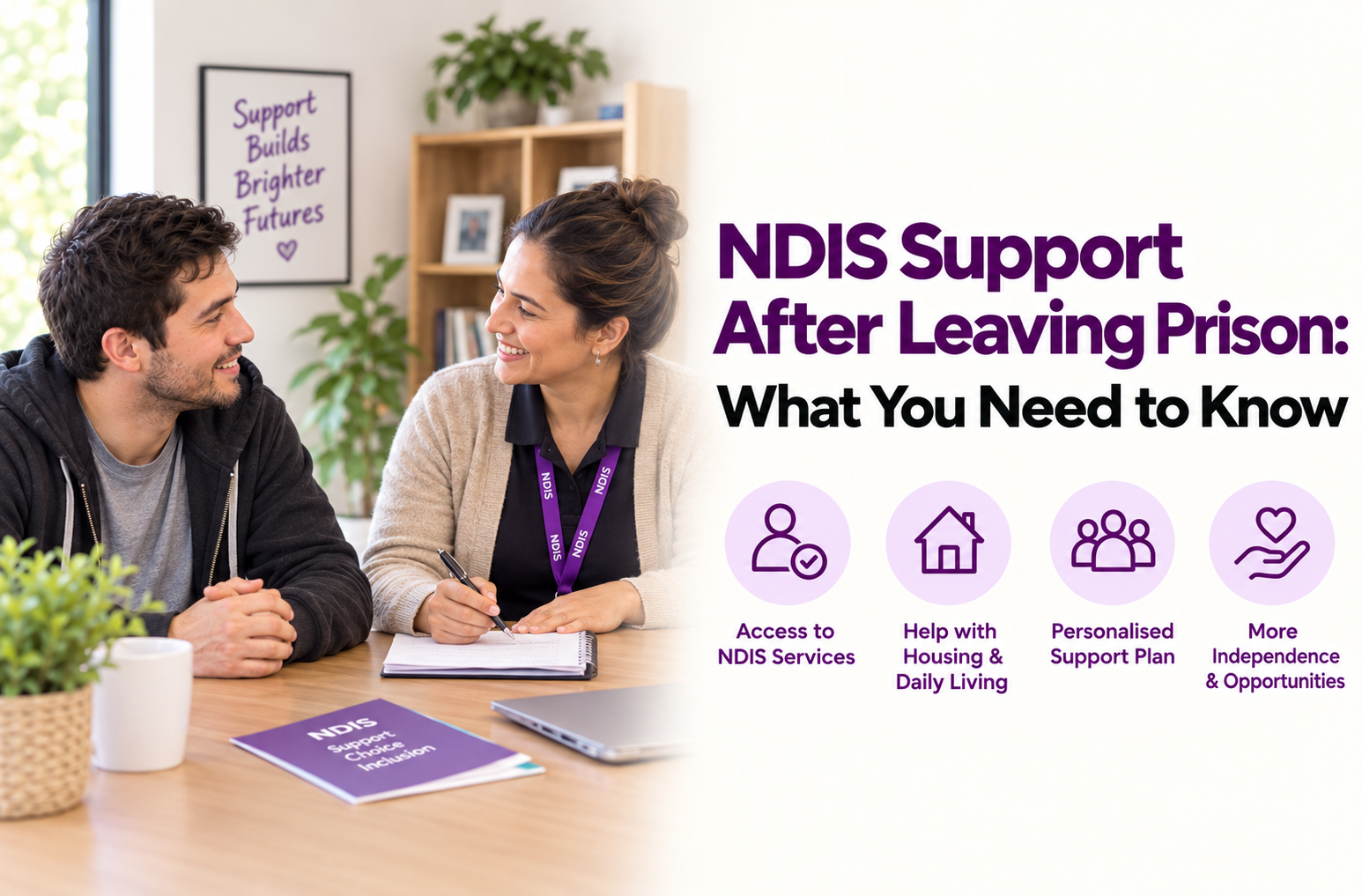
Leaving prison and returning to community life can involve many changes. For a person living with disability, having the right support in place can make everyday tasks, appointments, housing, communication, and community participation easier to manage.
NDIS support after prison may be available to eligible people with disability, depending on their individual circumstances and NDIS requirements. Understanding how support works after release can help participants, families, and support teams plan for the transition.
Understanding NDIS Support After Prison
NDIS support after prison refers to disability-related assistance that an eligible participant may receive after leaving custody and returning to community living. The NDIS focuses on providing reasonable and necessary supports that relate to a person’s disability.
A person’s involvement with the justice system does not automatically determine whether they can access the NDIS. Eligibility is based on the relevant NDIS requirements, including the nature and impact of a person’s disability.
NDIS after prison may involve support with daily living, community participation, communication, skill development, personal care, or other disability-related needs.

Can You Access the NDIS After Release?
People may wonder whether NDIS support after leaving prison is possible. A person’s eligibility depends on their individual circumstances and whether they meet the NDIS access requirements.
Someone who was already an NDIS participant before entering prison may also need to understand how their plan and supports are affected during custody and after release. The arrangements can depend on the person’s circumstances and the type of support they require.
People who were not NDIS participants before their sentence may be able to apply after release if they meet the relevant access requirements.
What Support May Be Available?
The type of NDIS support after prison available depends on the participant’s disability, goals, approved plan, and individual support needs.
Depending on the person’s circumstances, support may include:
- Assistance with daily personal activities
- Household tasks
- Community participation
- Transport-related support where applicable
- Skill development
- Support coordination
- Assistance with communication
- Supported accommodation-related supports
- Behaviour support where appropriate
The NDIS does not fund every service a person may need after release. Supports must meet the relevant NDIS funding requirements.

NDIS Support and Community Re-Entry
Returning to community life can involve finding stable accommodation, reconnecting with family, attending appointments, managing daily routines, and accessing community activities.
NDIS after release from prison may help an eligible participant manage disability-related barriers during this transition. For example, a participant may require assistance with daily routines, communication, mobility, or developing skills for greater independence.
However, the NDIS is not a replacement for mainstream services or the justice system. Housing, legal assistance, income support, health care, and other services may involve different government departments or organisations.
Support for People With Complex Needs
Some people leaving prison may have complex disability-related support requirements. These may include intellectual disability, acquired brain injury, psychosocial disability, or other conditions that affect daily life.
NDIS prison support can involve disability-related assistance before and after a person’s involvement with the justice system, subject to the relevant NDIS rules and individual circumstances.
For people with complex support needs, a coordinated approach can be important. Support workers, families, support coordinators, health professionals, and other services may need to communicate appropriately to help the participant work towards their goals.
Forensic Disability Support After Prison
For some participants, forensic disability support may be relevant after release. This type of support can assist people who have complex disability needs and involvement with the justice system.
Our NDIS Forensic Support information explains how specialised disability support can assist participants with complex needs.
NDIS support after leaving prison may include structured assistance with daily routines, community participation, communication, skill development, and other disability-related needs.
At This Ability Care, we support NDIS participants with complex needs through respectful and consistent assistance. Our focus is on dignity, safety, personal choice, community participation, and building independence.
Planning for Life After Release
Planning early can help identify the support a person may need when returning to the community. Where appropriate, the participant and their support team can consider areas such as accommodation, personal care, daily routines, community participation, and appointments.
NDIS support after prison should be based on the participant’s current needs and goals rather than assumptions about their past.
A support plan may also need to consider communication preferences, risks, behaviour support requirements, family involvement, and connections with other community services.

Finding an NDIS Provider After Prison
Finding the right provider can be an important part of preparing for community living. When comparing providers, consider their experience with complex disability needs, staff training, communication, safety practices, and ability to work with a participant’s wider support team.
NDIS support after prison should be respectful and focused on the participant’s individual goals. A good provider should understand that each person’s circumstances are different.
This Ability Care provides support for NDIS participants across Adelaide and can assist people with different disability-related needs. Our team focuses on practical assistance, independence, safety, and meaningful participation in everyday life.
NDIS Support and Independence
The goal of NDIS after prison support is not simply to provide assistance with daily tasks. Where appropriate, support can also help participants develop practical skills and confidence.
For example, a participant may work towards managing household routines, attending appointments, accessing community activities, improving communication, or making more independent decisions.
NDIS after release from prison can therefore form part of a wider transition plan for eligible participants who need disability-related assistance as they return to community life.
NDIS Support After Leaving Prison: What You Need to Know

What Is Forensic Disability Support and Who Needs It?


What Is NDIS Plan Management? How Does It Work?

Frequently Asked Questions
What is forensic disability support?
Forensic disability support is specialised assistance for people with disability who may have complex needs connected with the justice system, behaviours of concern, or other circumstances requiring structured support.
Who needs forensic disability support?
It may be suitable for people with disability who have complex support needs, a history of justice-system involvement, behaviours of concern, or require additional assistance with safety, routines, and community participation.
What does a forensic disability support worker do?
A forensic support worker can assist with daily activities, community participation, skill development, communication, routines, and implementing agreed support strategies.
What services are included in forensic disability support?
Support may include personal care, household assistance, community participation, skill development, behavioural support, communication assistance, and help with daily routines.
How does forensic disability support help people with complex needs?
It can provide consistent assistance, structured routines, skill development, community participation, and support with behaviours or situations that may be difficult to manage independently.
Can people with complex mental health needs receive forensic disability support?
Some people with complex mental health needs may be eligible for disability support. Eligibility and available funding depend on individual circumstances and applicable NDIS requirements.
Is forensic disability support available through the NDIS?
Eligible NDIS participants may receive funding for appropriate disability-related supports. The availability of specific supports depends on individual circumstances and the participant’s approved plan.
How can I find a forensic disability support provider?
Look for a provider with experience in complex disability support, trained staff, clear communication, and an approach that respects participant choice, dignity, and safety.
What is the difference between forensic disability support and regular disability support?
Both can assist with daily living and community participation. Forensic disability support may involve additional structure and specialised approaches for people with complex needs or justice-system involvement.
How can forensic disability support help with community living and independence?
It can help participants develop practical skills, follow routines, communicate their needs, access community activities, and build confidence while receiving appropriate support.