

What Is Forensic Disability Support and Who Needs It?
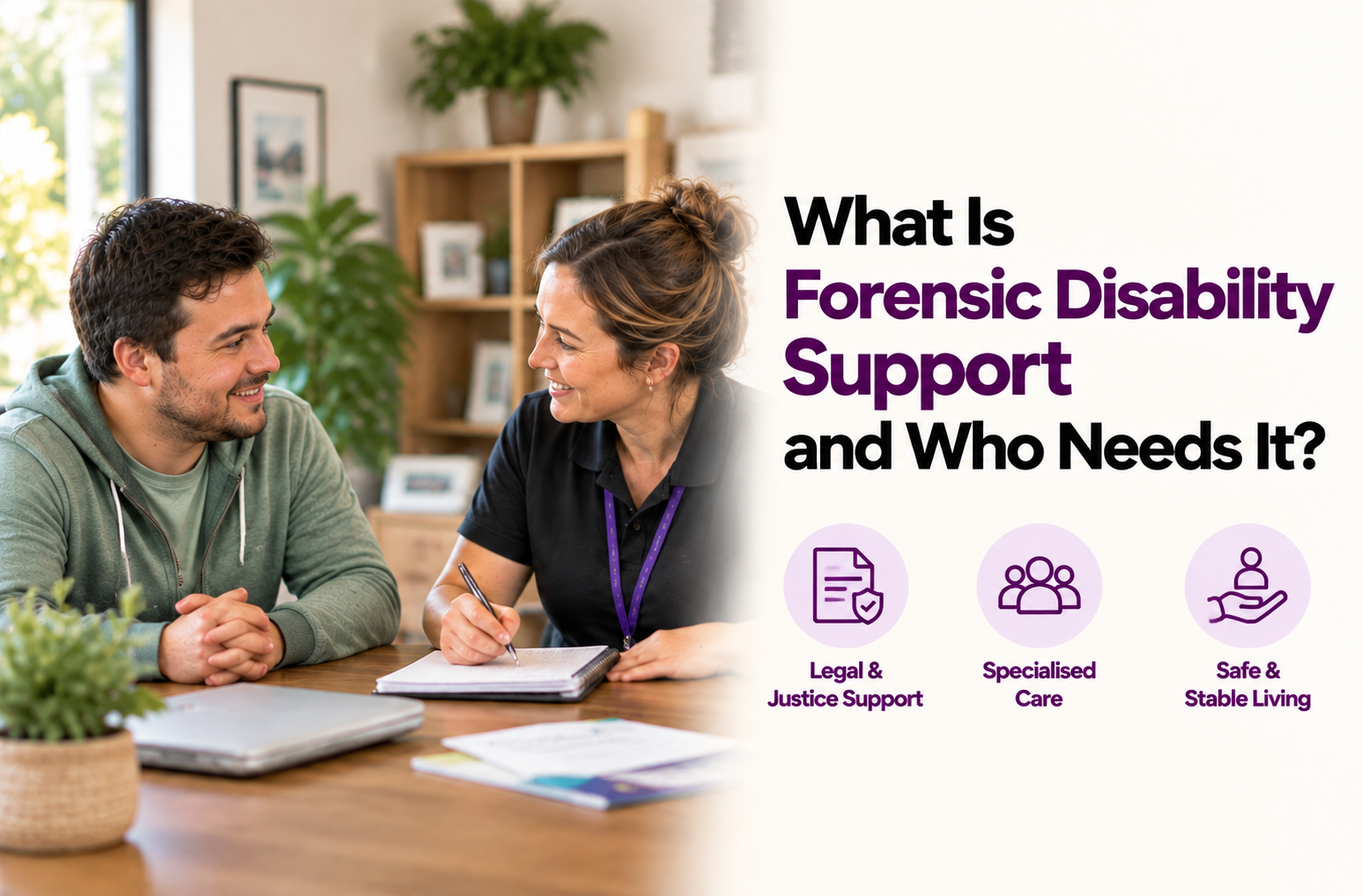
People with disability may sometimes have complex support needs that require more than regular disability assistance. Some individuals may have a history of contact with the justice system, behaviours of concern, or other circumstances that require specialised support. This is where forensic disability support can play an important role.
If you are wondering what is forensic disability, it generally refers to disability support for people whose disability and involvement with the justice system create additional or complex support requirements. The focus is on safety, stability, skill development, and helping people participate in community life.
What is Forensic Disability?
Understanding what is forensic disability starts with recognising that it is not simply another type of disability. The term is commonly used in situations where a person with disability has complex needs connected with the criminal justice system or forensic settings.
People receiving this type of support may have intellectual disability, acquired brain injury, psychosocial disability, or other disabilities alongside behaviours of concern or a history of contact with the justice system.
Support needs can vary greatly from one person to another. Some people may require assistance with communication and daily routines, while others may need structured support to manage behaviours, understand boundaries, develop life skills, and participate safely in the community.

Who May Need Forensic Disability Support?
People who require this type of assistance can have different backgrounds and support requirements. What is forensic disability support in practice depends on the person’s individual circumstances and goals.
For example, support may be relevant for people who:
- Have a disability and a history of contact with the justice system
- Need assistance managing behaviours of concern
- Require structured routines and consistent support
- Have complex communication or social needs
- Need help developing independent living skills
- Require support to safely participate in community activities
The purpose is not to define a person by their history. Instead, support focuses on their current needs, strengths, safety, and ability to work towards greater independence.
What Does Forensic Disability Support Include?
Forensic support can cover many areas of daily life. Forensic support services may include assistance with personal routines, communication, community participation, household tasks, social skills, and developing practical living abilities.
Support may also involve working with families, support coordinators, allied health professionals, and other members of a participant’s support team. Consistent communication can help everyone understand the participant’s needs and follow agreed support approaches.

Daily Living Assistance
Participants may receive help with personal care, meal preparation, household activities, appointments, and other everyday routines. Support is provided according to individual requirements.
Behavioural Support
Some participants may experience behaviours of concern. Support can focus on identifying triggers, encouraging positive alternatives, building coping skills, and following appropriate behaviour support strategies.
Community Participation
Community participation can help people build confidence and develop social skills. Support workers may assist participants with shopping, appointments, recreational activities, education, employment-related activities, or other community opportunities.
Skill Development
Developing practical skills can support greater independence. This may include managing household tasks, following routines, communicating needs, making choices, and learning safer ways to respond to difficult situations.
The Role of a Forensic Support Worker
A forensic support worker provides practical and structured assistance based on a participant’s individual support plan. Their role can include helping with daily activities, encouraging positive routines, supporting community participation, and maintaining a safe environment.
A forensic support worker may also communicate with families, support coordinators, and other professionals involved in the participant’s care. Good communication and consistent approaches are important when supporting people with complex needs.
The exact responsibilities depend on the participant’s situation, goals, NDIS plan, and other relevant support arrangements.
Forensic Disability Support in Adelaide
People looking for forensic disability support in Adelaide may need a provider that understands complex disability support requirements and can work respectfully with participants and their wider support teams.
At This Ability Care, we provide support for NDIS participants with complex needs. Our approach focuses on dignity, safety, personal choice, community participation, and developing greater independence.
Our forensic disability support in Adelaide can help participants work towards practical goals while receiving consistent assistance with their daily routines and community involvement.
How Forensic Disability Services Can Help
Good forensic disability services should consider the whole person rather than focusing only on their disability or past experiences. Support can help participants develop skills, maintain routines, communicate their needs, and take part in community life.
Forensic disability services may also provide structured assistance for people who require additional support with safety, behaviour, communication, or daily decision-making.
When support is consistent and respectful, participants may have greater opportunities to develop confidence and work towards their personal goals.

What Is the Difference Between Forensic and Regular Disability Support?
A common question about what is forensic disability support is how it differs from standard disability assistance.
Regular disability support can cover a wide range of needs, including personal care, household tasks, community participation, and skill development. Forensic disability support may involve these same areas but can require additional structure because of complex behaviours, justice-system involvement, safety considerations, or other circumstances.
The level and type of support should always be based on the individual rather than their diagnosis or history alone.
Choosing a Forensic Disability Support Provider
When looking for a provider, consider their experience supporting people with complex needs, their approach to participant safety, staff training, communication practices, and ability to work with other members of a support team.
It can also help to ask how the provider supports personal choice, community participation, independence, and positive behaviour strategies.
This Ability Care supports participants with a focus on respectful care, individual goals, safety, and independence. Our team can work with participants and their support networks to provide appropriate assistance based on their needs.
NDIS Support After Leaving Prison: What You Need to Know
What Is Forensic Disability Support and Who Needs It?


What Is NDIS Plan Management? How Does It Work?

Frequently Asked Questions
What is forensic disability support?
Forensic disability support is specialised assistance for people with disability who may have complex needs connected with the justice system, behaviours of concern, or other circumstances requiring structured support.
Who needs forensic disability support?
It may be suitable for people with disability who have complex support needs, a history of justice-system involvement, behaviours of concern, or require additional assistance with safety, routines, and community participation.
What does a forensic disability support worker do?
A forensic support worker can assist with daily activities, community participation, skill development, communication, routines, and implementing agreed support strategies.
What services are included in forensic disability support?
Support may include personal care, household assistance, community participation, skill development, behavioural support, communication assistance, and help with daily routines.
How does forensic disability support help people with complex needs?
It can provide consistent assistance, structured routines, skill development, community participation, and support with behaviours or situations that may be difficult to manage independently.
Can people with complex mental health needs receive forensic disability support?
Some people with complex mental health needs may be eligible for disability support. Eligibility and available funding depend on individual circumstances and applicable NDIS requirements.
Is forensic disability support available through the NDIS?
Eligible NDIS participants may receive funding for appropriate disability-related supports. The availability of specific supports depends on individual circumstances and the participant’s approved plan.
How can I find a forensic disability support provider?
Look for a provider with experience in complex disability support, trained staff, clear communication, and an approach that respects participant choice, dignity, and safety.
What is the difference between forensic disability support and regular disability support?
Both can assist with daily living and community participation. Forensic disability support may involve additional structure and specialised approaches for people with complex needs or justice-system involvement.
How can forensic disability support help with community living and independence?
It can help participants develop practical skills, follow routines, communicate their needs, access community activities, and build confidence while receiving appropriate support.